Your Guide to Building on a Slope
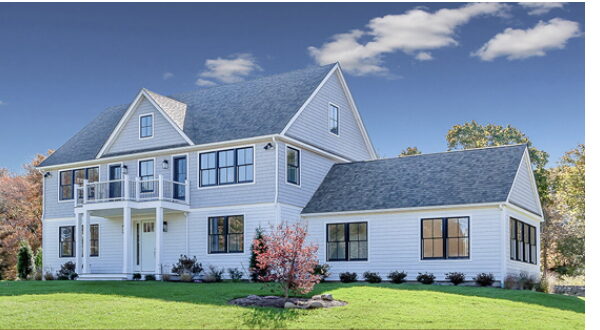
Building on a slope is not only possible. It can be an incredibly rewarding home design process. Hillside properties also offer features that flat lots can’t. For example, daylight basements fill your home with sunlight, and the land offers natural drainage solutions. Elevated views also create a striking sense of place. The key to success lies in careful planning, understanding your site, and selecting smart design strategies.
Understanding Slope
Slope is measured as a percentage: the vertical rise over 100 feet of horizontal run. Steeper grades affect everything from septic approvals and driveway design to crane access during construction. Some towns restrict septic systems on steep slopes, so whether your property connects to a sewer or requires a septic system can determine what’s feasible.
Building on a Slope: Turning Terrain Into an Asset
Smart design transforms a challenging slope into one of your home’s greatest assets. Options include walkout or daylight basements for sunlight and backyard access. Stepped foundations terrace the home while keeping floors level. In addition, split-level or hillside plans adapt naturally to multi-story layouts. Proper orientation ensures the home captures the best views and integrates smoothly with the street approach.
Site & Engineering Essentials for Building on a Slope
A thorough understanding of your lot is critical before construction begins. A current survey and topography map guide foundation steps, retaining walls, and drainage planning. Soil and perc testing confirm septic feasibility or identify sewer connections. Proper drainage, including swales, gutters, and underdrains, protects both your property and neighboring land. Plan driveway and crane access carefully, because local rules often limit slope. Engineers must also design the foundation for grade, soil type, and frost depth.
Budget & Timeline Considerations
Sloped sites can introduce unique costs and planning requirements. Excavation, hauling, and retaining walls may add to the budget. You may also need temporary access improvements for crane and carrier movement. Permitting can take longer on challenging sites, but modular construction keeps the overall timeline efficient. The factory builds the modules indoors while site work is underway, which minimizes weather delays.
Common Questions About Building on a Slope
Building on a slope raises some specific concerns. Here’s what homeowners often ask:
- How steep is “too steep”?
There’s no universal number. Engineering and local codes determine feasibility. Extreme slopes may limit septic or access, though sewer connections can resolve many issues. - Is modular still cost-effective on a slope?
Yes. Site-specific costs like retaining walls or drainage may increase, but modular efficiency still speeds up construction. - Can I add a garage on a sloped site?
Options include tuck-under garages, side-entry layouts, or detached garages linked by a breezeway. - Will construction cause erosion?
Your site plan includes erosion controls and drainage measures to protect both your property and your neighbors.
Get Started
If you own a sloped property, or are considering building on a slope, schedule a site review with Westchester Modular Homes Construction Corp. Our team can provide a feasibility plan with budget, timeline, and tailored design options.
About Westchester Modular Homes Construction Corp.
Westchester Modular Homes Construction Corp. has built thousands of premium custom homes. Our homes usually cost less than traditional construction, yet they still meet the most exacting standards for quality workmanship.
We proudly serve Westchester, Putnam, Dutchess, Orange, Rockland, and Sullivan counties in New York. We also serve Sussex County in New Jersey and Pike County in Pennsylvania.
Learn more by joining one of our convenient virtual tours of our factory. You can sign up here.
You’ll learn first-hand about our quality, service, innovation, and agile speed. You can also ask your questions about modular home building. Access our free guide that outlines the key features of building a modular home. Or give us a call at (845) 278-1700 for Westchester, Putnam and Dutchess Counties. If you are located in Orange, Sullivan, Rockland counties, please call (845) 787-0400.